Quick Answer
Tamil cuisine is a deeply aromatic, largely vegetarian-friendly South Indian food tradition built on fermented batters, tamarind, curry leaves, mustard seeds, and freshly ground spice blends. If you are searching for Tamil food near me in the GTA, Dosa Den in Brampton offers 100+ menu items rooted in authentic South Indian and Tamil cooking — including 40+ varieties of dosa — making it one of the most complete South Indian dining experiences in the region.
What Is Tamil Food, and Why Are So Many GTA Diners Discovering It in 2026?
If you have ever typed “tamil food near me” into your phone while driving through Brampton or scrolling through restaurant options on a weeknight, you are part of a growing wave of curious diners who are finally discovering one of the world’s most ancient and deeply satisfying food cultures. Tamil cuisine — rooted in the Tamil Nadu region of South India and carried across the globe by Tamil communities — is not a trend. It is a tradition that has been evolving for over two thousand years, and in 2026, it is finally getting the attention it deserves right here in the GTA.
Tamil food is built on a philosophy of balance. Every meal is designed to hit the six tastes recognized in Ayurvedic cooking: sweet, sour, salty, bitter, pungent, and astringent. That is why a single South Indian meal can feel so complete — nothing is missing, and nothing is excessive. The cooking relies on whole spices toasted in oil, fermented batters that develop complex flavour overnight, fresh curry leaves and mustard seeds crackling in a hot pan, and tamarind as the backbone of sour depth that no other ingredient quite replicates.
At Dosa Den, we cook from this tradition every single day. Our chefs bring years of expertise working with these foundational techniques, and every dish on our menu reflects that. Whether you are a first-time visitor or someone who grew up eating this food at home, the flavours we serve are designed to feel both authentic and welcoming.
Tamil cuisine is not just about what is on the plate — it is about how the ingredients are prepared, fermented, and layered so that every bite tells a complete story.
What Are the Essential Dishes You Should Know Before Your First Visit?
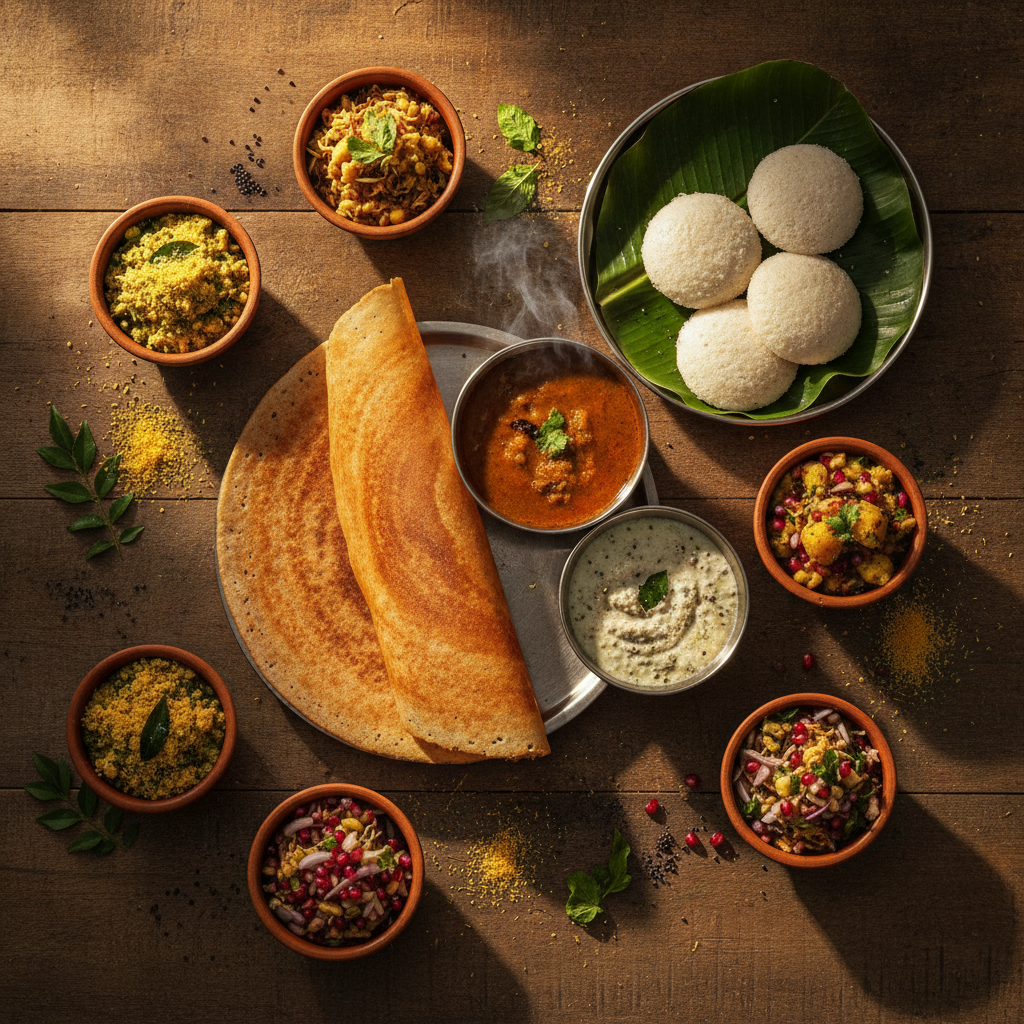
Tamil cooking offers a wide range of dishes, but a few essentials define the cuisine and are the best starting points for anyone new to it. The most iconic of these is the dosa — a thin, crispy crepe made from a fermented batter of rice and urad dal, cooked on a flat griddle until golden and slightly charred at the edges. It is served with chutneys and sambar, and it is as close to a perfect food as this cuisine gets.
Dosa: The Cornerstone of Tamil Cooking
A dosa is simultaneously simple and technically demanding. The batter must ferment for the right amount of time, the griddle must be at the exact temperature, and the pour and spread must be done with practiced confidence. The result — when done correctly — is a crepe with a lacy, crispy exterior and a slightly chewy interior that no frozen or packaged version ever replicates.
At Dosa Den, we serve more than 40 varieties of dosa. That is not padding — each variety represents a genuinely different experience. The Masala Dosa is filled with spiced potato and onion and is usually the best first choice for newcomers. The Mysore Masala Dosa adds a layer of spiced red chutney inside the crepe before the filling, deepening the heat and flavour considerably. The Benne Dosa — a Karnataka-style variation made with generous butter — has a richness and crispiness that has earned it a passionate following. If you have been searching for benne dosa near me anywhere in the GTA, our Brampton location is where you will find it done right.
Beyond masala and benne, our menu spans paneer dosas, Schezwan dosas, cheese dosas, rava dosas (made with semolina for a crunchier, lacier texture), and many more. Each one is freshly prepared to order — there is no pre-cooking or batch reheating here.
Idli, Vada, and the Breakfast Table
Alongside dosa, the Tamil breakfast tradition includes idli — soft, steamed rice cakes made from the same fermented batter — and vada, a fried lentil doughnut that is crispy on the outside and airy within. Both are served with sambar (a lentil-based vegetable stew spiced with tamarind and tomato) and coconut chutney. This trio — idli, vada, sambar — is arguably the most beloved breakfast combination in all of South India, and for good reason. It is filling, deeply flavourful, and surprisingly light.
Uttapam, Pongal, and Beyond
Uttapam is another essential — a thicker, softer pancake made from the same fermented batter as dosa but topped with onions, tomatoes, green chilies, and coriander before cooking. It has a more rustic, hearty character than a dosa and is a favourite among regulars who want something slightly more substantial. Pongal, a comfort dish made from rice and moong dal cooked with ghee, pepper, and cumin, is one of the most soothing things you can eat on a cold Brampton afternoon.
For a deeper look at how Indian street food fits into this picture, our guide on What Is Chaat? Your Guide to India’s Most Exciting Street Food is a great companion read.
What Flavours Define Tamil Cuisine, and How Do They Work Together?
Tamil food has a distinct flavour profile built from a handful of foundational ingredients that appear across almost every dish. Once you understand these, navigating any Tamil or South Indian menu becomes intuitive.
The building blocks of Tamil flavour are: tamarind for sourness; curry leaves for a fragrant, almost citrusy herbal note; mustard seeds for a nutty, slightly bitter pop when tempered in oil; coconut in chutney form for cooling creaminess; dried red chilies for background heat; and asafoetida (hing) for a savory, umami-adjacent depth. These are not optional additions — they are the scaffolding of the cuisine.
What surprises many newcomers is how the heat in Tamil food works. Unlike some other regional Indian cuisines where chilies dominate, Tamil cooking layers heat gradually. You feel it at the back of your throat after the other flavours have already registered — the tamarind, the coconut, the mustard — and it builds slowly rather than hitting all at once. That layering is intentional, and it is one of the things that makes the cuisine so addictive.
Sambar is perhaps the best example of this philosophy in a single pot. It contains lentils for body, tamarind for sourness, tomatoes for brightness, a blend of roasted spices for warmth, and fresh vegetables for texture — all tempered with mustard seeds and curry leaves in ghee. It is a dish with no weak note in the composition.
In Tamil cooking, every ingredient earns its place. The balance of sour, spiced, and cooling elements in a single meal is not accidental — it is the result of a culinary tradition refined over centuries.
How Does Tamil Food Differ from Other Indian Cuisines?
Tamil South Indian food is distinct from North Indian cuisine in preparation, ingredients, and philosophy. The most obvious difference is the role of wheat versus rice. North Indian cooking centres heavily on wheat-based breads — naan, roti, paratha — while Tamil cooking is built almost entirely around rice, rice flour, and rice-and-lentil batters. This makes Tamil food naturally gluten-light in many of its core dishes.
The spice palette is also different. North Indian cuisine often features warming spices like cardamom, cinnamon, and cloves in aromatic blends like garam masala. Tamil cooking uses these too, but relies more heavily on curry leaves, dried red chilies, and tamarind as its primary flavour drivers. The result is a cuisine that reads as brighter, more citrusy, and more pungent than the rich, cream-forward dishes many people associate with Indian food in general.
This is an important distinction for anyone searching for south indian food near me or a south indian restaurant near me in the GTA — you are looking for something that is genuinely different from the butter chicken and biryani menus you may already know. South Indian and Tamil food is its own world, and it rewards curiosity.
For a broader look at how to navigate Indian restaurant options across the GTA, our article on Indian Food in Toronto: How to Find Authentic Vegetarian Options in a Sea of Choices walks you through exactly what to look for.
The Role of Fermentation
One of the most underappreciated aspects of Tamil cuisine is how central fermentation is to the cooking. Dosa and idli batters are soaked and ground, then left to ferment for hours — sometimes overnight — before cooking. This fermentation does two things: it develops a gentle sourness that gives the batter its characteristic flavour, and it dramatically improves the digestibility of the lentils and rice. The result is food that is deeply satisfying without feeling heavy.
A Cuisine That Is Naturally Vegetarian-Friendly
Tamil Brahmin cooking, in particular, has a centuries-long tradition of purely vegetarian cuisine — and the vegetarian dishes of Tamil Nadu are among the most complete, satisfying, and protein-rich in the world. Lentils, legumes, fermented batters, coconut, and a wide range of vegetables form the core of the diet. At Dosa Den, our entire menu is vegetarian, which means every single item — all 100+ of them — has been designed with care and intention. Nothing on our menu is an afterthought. If you have been searching for a vegetarian restaurant near me in the Brampton area that goes far beyond a limited selection, our menu will change your expectations entirely.
For those curious about the street food side of Indian vegetarian cooking, we also recommend reading Your Top Questions About Chaat, Answered — it covers everything from pani puri to bhel puri in plain language.
Where to Find Authentic Tamil and South Indian Food Near You in the GTA
Authentic Tamil and South Indian food is closer than most GTA residents realize. Dosa Den is located in Brampton and serves the broader GTA community — families, students, and working professionals who want real South Indian cooking without a long drive or a long wait.
When you search for tamil restaurants near me or south indian restaurants near me in the GTA, the results can be uneven. Some restaurants serve a narrow selection of the most well-known dishes and stop there. Others use shortcuts that affect the quality and authenticity of what reaches your table. At Dosa Den, our team of skilled chefs prepares everything fresh — batters fermented properly, chutneys made in-house, and every dish cooked to order. We have served over 5,000 happy customers with verified Google reviews, and that feedback has shaped how we cook and how we serve.
Our Brampton location features warm indoor and outdoor seating — a relaxed, welcoming ambiance that suits solo diners, families with children, and friend groups equally. We are not a rushed canteen experience, but we are also never pretentious. You can come in wearing a hoodie after a long shift and feel completely at home.
Takeout and Catering
We know GTA life moves fast. That is why our takeout option is built for convenience without cutting corners. Orders are packed carefully to keep dosas crispy and chutneys fresh, and our team treats every takeout order with the same care as a dine-in meal.
For larger gatherings — office events, cultural celebrations, family functions — our catering service brings the full Dosa Den experience to your venue. South Indian food is exceptional for catering precisely because so many of the dishes travel well and can be served to large groups without losing quality. Dosa stations in particular tend to become the highlight of any event. If you are planning something in the Brampton area and want food that people will genuinely talk about afterward, reach out and let us build a menu with you.
What to Order on Your First Visit
If this is your first time exploring Tamil or South Indian food and you are not sure where to begin, here is our honest recommendation: start with a Masala Dosa and a bowl of sambar on the side. Add a plate of idli if you are dining with someone and want to share. Order a coconut chutney — it is the perfect cooling counterpoint to the heat and sourness of the other components.
Once you have the basics down, your second visit is where it gets exciting. That is when you can start exploring the Benne Dosa, the Uttapam, the Schezwan varieties that blend Tamil and Indo-Chinese influences, or the chaat options that bring a completely different register of flavour to the table. With 100+ items on the Dosa Den menu, there is always something new to try — and our team is always happy to guide you.
You can also browse our full selection online at Dosa Den before your visit so you come in with a plan — or at least a shortlist.
Ready to Explore Tamil Food in Brampton?
Whether you are a first-timer curious about South Indian cuisine or a regular looking for something new on the menu, Dosa Den in Brampton is your destination. Dine in, order takeout, or ask us about catering for your next event.
✍️ Written by the Dosa Den Team
We are the team behind Dosa Den, Brampton’s South Indian kitchen serving 40+ dosa varieties, 100+ menu items, and over 5,000 happy customers. We write from the kitchen outward — sharing the food traditions we cook every day so that more people in the GTA can find, understand, and love South Indian cuisine.
Frequently Asked Questions
What is the difference between Tamil food and general South Indian food?
Tamil food is one specific regional tradition within the broader category of South Indian cuisine. South Indian food encompasses the cuisines of Tamil Nadu, Kerala, Karnataka, Andhra Pradesh, and Telangana — each with distinct ingredients, techniques, and signature dishes. Tamil food in particular is known for its heavy use of tamarind, curry leaves, rice-based dishes, and deeply fermented batters. At Dosa Den, our menu draws primarily from Tamil and broader South Indian traditions, giving you access to a wide and authentic range of dishes in one place.
How spicy is South Indian food, and can I adjust the heat level?
South Indian food does use chilies, but the heat is typically layered and builds gradually rather than overwhelming the palate upfront. Many dishes — including idli, plain dosa, and pongal — are mild by default. At Dosa Den, our team is happy to guide you toward milder options if you prefer lower heat, and you can always ask about the spice level of a specific dish before ordering. The coconut chutney served alongside most dishes is also a natural, cooling counterbalance to heat.
Why is dosa considered the signature dish of Tamil cuisine?
Dosa has become the global ambassador of South Indian and Tamil cooking because it encapsulates the cuisine’s core technique — fermentation — and its philosophy of balance. The crispy texture, the mild sourness, the earthy lentil flavour, and the way it pairs with coconut chutney and sambar create a complete sensory experience in a single dish. It is also incredibly versatile: the same basic batter can become dozens of different preparations depending on what is added, layered, or folded inside. That versatility is precisely why Dosa Den offers more than 40 distinct varieties.
Can I order South Indian catering for a large event in the Brampton area?
Yes — Dosa Den offers catering services for events of various sizes in the Brampton area and across the GTA. South Indian food is particularly well-suited to group catering because many dishes — including dosa, idli, and chaat items — can be prepared fresh in volume without losing quality. Our team works with you to design a menu that suits your event, your guest count, and your preferences. Reach out through our website to start the conversation and get a customized catering plan.