Finding great dosa Brampton diners can truly stand behind takes more than a Google search — it takes knowing what to look for before the first bite ever reaches your plate. In 2026, Brampton’s South Indian dining scene has grown considerably, and with more options available than ever, the gap between a genuinely authentic dosa and a passable imitation has never mattered more. Whether you’re a longtime fan of South Indian cuisine or you’re searching for dosas near me for the very first time, the ability to judge quality before you commit to a meal is a skill worth having. At Dosa Den, we’ve spent years perfecting our craft for over 5,000 happy customers, and we want to share what we know — not just to earn your trust, but because authentic food deserves to be recognized and celebrated.
QUICK ANSWER
An authentic dosa is identifiable before you take a single bite: look for a deep golden-to-amber colour, a paper-thin crisp edge, a lacy or slightly blistered surface, and the unmistakable aroma of fermented rice-and-lentil batter cooked on a well-seasoned iron griddle. If the colour is pale, the texture is doughy, or the chutney tastes store-bought, those are reliable warning signs that the kitchen is cutting corners.
What Does an Authentic Dosa Actually Look Like?
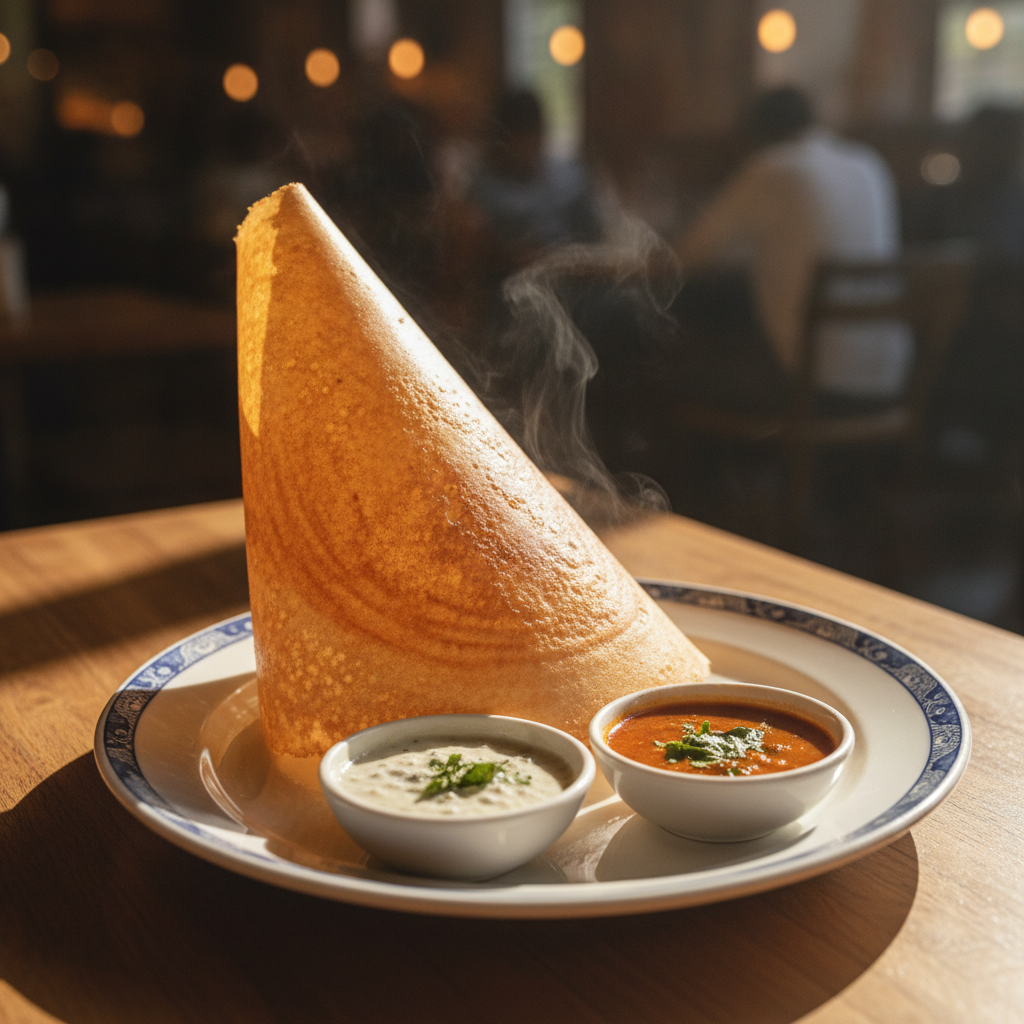
An authentic dosa has a distinct visual identity: deep golden to amber across the flat surface, with a slightly darker, crispy lace pattern along the thinner edges. That colour is your first and most reliable signal. A pale, cream-coloured dosa signals under-fermented batter or a griddle that wasn’t hot enough — both are shortcuts that sacrifice flavour. A dosa that’s uniformly dark brown or almost charred tells you the batter was too thin or the heat too aggressive, which ruins the delicate balance between crunch and tenderness.
Look closely at the surface texture. A properly made dosa will have a slightly blistered or porous appearance — the natural result of carbon dioxide bubbles produced during fermentation. Those tiny pockets are a visual guarantee that the batter was fermented long enough, typically 8 to 12 hours depending on the ambient temperature. A smooth, featureless surface almost always means the batter was freshly mixed without adequate fermentation time, and no amount of seasoning will compensate for the flat, slightly raw flavour that follows.
The fold also tells a story. A well-made dosa holds its shape when rolled or folded — it doesn’t collapse, crack catastrophically, or go soggy within seconds. When our team at Dosa Den folds a dosa, it should stay structured enough to eat without the filling tumbling out, yet thin enough to shatter lightly at the crisp edge when you break a piece off. That structural balance is a product of batter ratio, griddle temperature, and years of practice — not luck.
How Does an Authentic Dosa Sound and Feel?
Sound and texture are just as revealing as appearance — and both are assessable before the first bite. A genuinely crispy dosa produces a distinct, light crackling sound when you press the edge gently or snap a piece off. That sound is the result of moisture being driven almost completely out of the thin batter layer during cooking. If the dosa bends silently like a soft flatbread, the griddle wasn’t seasoned correctly, the batter was too thick, or the cooking time was cut short.
When you lift a corner with your fingers, there should be virtually no grease transfer — just a faint warmth. Authentic dosas are cooked with a carefully controlled amount of oil or ghee, just enough to release the batter cleanly from the iron surface and develop flavour. A dosa that leaves your fingers visibly oily is one that relied on excess fat to prevent sticking, which usually means the batter consistency wasn’t right to begin with. The feel should be dry and crisp at the edges, with a barely perceptible give toward the center where the filling sits.
“A dosa that crackles when you touch it and holds its fold without collapsing isn’t a happy accident — it’s the result of batter that was properly fermented, a griddle at precisely the right temperature, and a cook who knows the difference.”
Weight matters too. Pick up a plain dosa or observe how it sits on the plate. A well-executed paper dosa or a classic plain dosa should feel almost weightless at the thin sections. If it feels dense or heavy for its size, the batter likely had too high a ratio of rice flour or was diluted incorrectly — a common shortcut that fills the stomach but misses the point of what a dosa is supposed to be.
Why Does the Aroma of a Dosa Matter So Much?
The aroma of a freshly made dosa is one of the most reliable quality indicators available, and you don’t need culinary training to use it. Authentic dosa batter undergoes lactic acid fermentation — the same natural process used in sourdough bread — which produces a mild, pleasant tanginess that you can actually smell when the batter hits the hot iron griddle. That warm, slightly sour, nutty aroma rising from the cooking surface is a chemical guarantee that your batter was fermented properly.
If you walk into a South Indian restaurant and the kitchen doesn’t carry that characteristic fermented grain scent, it’s worth paying attention. Batter made from pre-mixed powder or instant dosa mix lacks the depth of fermentation aroma almost entirely. The dosa may look passable, but the smell — and ultimately the taste — will be noticeably flatter. At Dosa Den, our batter is made fresh in-house and allowed to ferment naturally, which is why our kitchen carries that warm, inviting aroma that regulars recognize from the moment they walk in.
The secondary aromas matter too. When a masala dosa is cooking, you should detect the warm fragrance of mustard seeds, curry leaves, and turmeric from the potato masala filling — not just cooking oil. For specialty varieties, the aroma profile shifts. A benne dosa near me search often leads people to expect a rich, buttery fragrance — and an authentic version absolutely delivers it. Those layered smells arriving before the plate does are the kitchen telling you exactly what’s inside.
Is the Chutney a Reliable Indicator of Authenticity?
Yes — the quality of the accompanying chutney is one of the clearest windows into a kitchen’s overall commitment to authenticity. Chutney is not an afterthought in South Indian cuisine; it is as carefully crafted as the dosa itself, and experienced diners know to assess it before the main dish even arrives.
Coconut chutney should be freshly ground — its texture will be slightly coarse, its colour a true ivory-white with green undertones from fresh coriander or chilli, and its taste will be bright, clean, and mildly sweet with a rounded heat. Pre-made or reconstituted coconut chutney tends to be uniformly smooth, slightly gluey in consistency, and noticeably duller in colour. The taste will often carry a preservative flatness rather than the lively brightness of freshly grated coconut blended with ginger, green chilli, and tempered mustard seeds.
Tomato chutney, another common accompaniment, should have visible texture and a deep brick-red colour from slow-cooked tomatoes with onion, dried red chilli, and a proper tempering of mustard seeds and curry leaves in oil. Thin, watery tomato chutney with a uniform orange hue and little flavour depth is a sign that it came from a jar or was prepared far in advance without the right technique.
Sambar — the lentil-based tamarind soup served alongside many dosa varieties — is another reliable test. Authentic sambar has a complex, layered flavour: sour from tamarind, slightly sweet from tomato and onion, earthy from toor dal, and fragrant from a house-made sambar powder. Restaurants that serve thin, uniform, oversalted sambar from a bulk concentrate are telling you something important about their kitchen’s priorities. If you’re navigating the broader Indian vegetarian dining landscape in the GTA, our guide on Indian Food in Toronto: How to Find Authentic Vegetarian Options in a Sea of Choices covers exactly how to read these signals across different restaurant types.
Where to Apply These Standards: Spotting the Best Dosa in Brampton
Brampton is home to a thriving South Indian community, and the city’s restaurant scene reflects that richness — but not every spot delivers equally. Applying the sensory checklist above before you commit to a meal can save you disappointment and help you quickly identify which kitchen is genuinely doing the work. When you’re searching for the best dosa in Brampton, look for restaurants where the menu goes deep, not just wide. A place that offers 40 or more distinct dosa varieties isn’t padding a menu for appearances — it’s signalling that the kitchen genuinely understands the breadth and nuance of South Indian cuisine.
Pay attention to whether the restaurant makes its batter in-house. This is the single most consequential variable in dosa quality, and it’s worth asking about. Restaurants that source pre-made batter or rely on instant mixes will almost always produce a dosa that looks acceptable but tastes noticeably flat — missing the gentle tang, the airy crispness, and the layered flavour that only natural fermentation provides.
The best dosa place in Brampton will also demonstrate range. A restaurant genuinely confident in its craft will offer classic options like the masala dosa — Brampton diners consistently rank it as their most-ordered dish — alongside regional specialties like the benne dosa, the set dosa, the rava dosa, and more adventurous varieties that reflect the full geography of South Indian cooking. A menu with only three or four dosa options is a sign that the kitchen treats it as a side offering rather than a calling. If you’re also curious about the street food accompaniments that round out a proper South Indian meal, our piece on Your Top Questions About Chaat, Answered is a useful companion read.
Finally, observe the dining room. Authenticity tends to aggregate — a restaurant that takes its batter seriously will almost certainly take its ambiance, its service, and its accompaniments seriously too. At Dosa Den, we’ve built a space in Brampton with warm indoor and outdoor seating specifically because we believe the experience of eating a great dosa should feel as good as the food itself. Over 5,000 customers and a consistently strong reputation on Google reviews reflect what happens when you refuse to cut corners anywhere in the process — from batter fermentation to the last spoonful of sambar.
If you’re searching for a reliable dosa place in Brampton where every dish on the menu — from a classic masala dosa Brampton residents have been ordering for years to South Indian street food and Indo-Chinese specialties — is made with the same level of care, the checklist above will point you directly to our door. A vegetarian restaurant near you should be able to clear every bar described in this guide. The ones that do are worth returning to again and again.
Ready to Put These Standards to the Test?
Come experience what a properly fermented, freshly prepared dosa actually looks, sounds, smells, and tastes like — with 40+ varieties, house-made chutneys, and sambar crafted from scratch every day. Dine in at our Brampton location, order takeout, or ask us about catering for your next event.
✍️ Written by the Dosa Den Team — Brampton’s home for authentic South Indian cuisine, with over 5,000 happy customers and 40+ freshly prepared dosa varieties made from house-fermented batter daily. We write from the kitchen outward — because the best food advice comes from people who make it.
Frequently Asked Questions
How can I tell if a dosa batter was properly fermented before ordering?
Ask whether the batter is made in-house or sourced externally — a confident kitchen will tell you. Visually, look for a slightly blistered or porous surface on the cooked dosa, which indicates fermentation-produced gas bubbles. The aroma is also a strong tell: properly fermented batter produces a mild, pleasant tanginess when it hits the hot griddle. Instant or pre-mixed batter lacks this fermentation depth almost entirely, and the resulting dosa will taste noticeably flatter and less complex.
What makes masala dosa different from other dosa varieties?
A masala dosa is a classic dosa filled with a spiced potato and onion mixture — the masala — seasoned with mustard seeds, turmeric, curry leaves, and green chilli. It’s one of the most recognized South Indian dishes in the world and remains the most commonly ordered dosa variety. The quality of the masala filling is as important as the dosa shell itself: it should be moist but not wet, properly spiced but not overwhelming, and fragrant from fresh tempering rather than pre-cooked in bulk and reheated.
Why does the colour of a dosa vary so much between restaurants?
Colour variation in dosas is the result of several interacting variables: the rice-to-lentil ratio in the batter, the degree of fermentation, the griddle temperature, and the amount of oil or ghee used during cooking. Pale dosas typically indicate under-fermented batter or insufficient griddle heat. Very dark or unevenly blackened dosas suggest excessive heat or a batter that was too thin. The ideal range is a consistent golden to amber hue — achieved through properly balanced batter and a well-seasoned iron griddle held at the right temperature throughout cooking.
Can I order authentic South Indian food for catering or takeout in Brampton?
Yes — at Dosa Den in Brampton, we offer both takeout and catering services. Catering is an excellent way to bring freshly prepared South Indian food — including dosas, chaat, and Indo-Chinese dishes from our 100+ item menu — to events of any size. Takeout orders are prepared with the same care as dine-in meals, and our warm indoor and outdoor seating is always available if you’d rather enjoy your meal with us. Contact us through Dosa Den’s website to discuss catering options for your next gathering.